The
operating system is a software system that served to make the control
and management of hardware and basic system operations, including
running software applications such as word processing programs and web
browsers.

In
general, the Operating System software is the first layer that is
placed on a computer's memory when the computer starts. While other
software run after the operating system is running, and the operating
system will do a common core services for the software it. The common
core services such as access to disks, memory management, task
scheduling, and user interface. So that each software no longer need to
perform the tasks of the common core, as it can be served and performed
by the operating system. A section of code that perform tasks and common
core is called the "kernel" of a Operating System.
The duties and functions of the operating system in a computer system are:
1. Managing Program
Today
the computer becomes an excellent tool because the computer is able to
handle multiple jobs at once. This is in accordance with the wishes of
the average computer programs using many applications at once. The use
of resources to handle the application program is handled by the
operating system. The operating system allows an application program
continues to run even though no other application programs are impaired
(error).
2. Managing Memory
Memory
capacity (Random Access Memory / RAM) is very limited. Suppose all the
RAM capacity has been used to run an application program but computer
users will be running another application program. The computer will use
a portion of hard disk capacity to run additional applications of this
program. The transfer of the workload from the RAM to the hard disk
performed by the operating system.
2. Provides User Interface (UI)
The
operating system provides a means that can be used by computer users.
These tools are used to govern computer. For example, when we use the
Windows XP operating system. This operating system provides a user
interface in the form of symbols, images, or icons. These icons or
images we click so that the computer can perform tasks according to our
wishes.
Operating systems generally consist of several parts:
1. Boot mechanism, namely to put the kernel into memory kernel, the kernel can be said as the core of the operating system.
2.
Command Interpreter or shell, served to read the input of commands and
provides several standard functions and basic functions that can be
called by an application / program maupub other software. Examples of
Shell is: Command Prompt in Windows XP (DOS in Windows 98), XTerm and
Konsole in Machine Linux (Unix).
3. Driver to interact with the hardware while controlling the performance of the hardware.
4. Resource Allocator. Operating system responsible for managing and allocating the resources of the device.
5. Handler. Handler role in controlling the system in order to avoid mistakes (errors) and use resources that are not necessary.
Operating systems had been developed which can be divided into four generations.
1. Early Generation
The
early development of the Operating System is still done manually in the
sense not appear any Operating System that automatically means that do
not support the service work that can be done in one series.
2. Second Generation
In
this generation has been the introduction of perkejaan that can be done
in one series or commonly referred to Proccessing Batch System.
3. Third Generation
In
the third generation, operating system already supports Multi-User,
Multi-Programming and Batch Proccessing System (Multi-Task).
4. Fourth Generation
In
this period, already diperkenankannya GUI (Graphical User Interface)
which means that the Operating System has the look and capitalize mouse,
End-Users can run applications / porgram or software.
In
the next generation operating system that is being introduced in an
operating system, this is an example of an operating system based
websites that work in an Operating System. And next-generation mobile
operating system was introduced on mobile devices such as PDAs, Pocket
PCs, and so forth. Also introduced in the next generation network
operating system technology virtual character, so in one network only 1
piece of the Operating System installed on the device which served as
Server. In addition, also introduced Cross Platform Operating System,
which means it can combine two different operating systems such as Linux
and Windows.
Today,
almost all human beings have a PC and Mobile PC. Due to the price
factor that is always changing and the human need for automated devices
such as a PC, the man makes the PC as a primary need. Along with the
development of PC technology was made compact so can be used as
automation tool that moves (Can be used anytime, anywhere and by
anyone). Examples of mobile PCs are: Laptop, Notebook and Netbook, these
devices also have a third operating system like a PC. And now it's time
we discussed the Operating System on PC.
The operating system on PC
WINDOWS
Windows is the operating system developed by Microsoft Corporation that uses the interface-based GUI (Graphical User Interface)
Windows
originally stems from Ms-Dos (Microsoft Disk Operating System) is a
text-based Operating Systems and Command-Line interpreter. The first
version of Windows, Windows Graphic Environmnet 1.0 is software that
works on 16-bit architecture and is not an operating system and running
on MS-DOS, so to run it require MS-DOS. MS-DOS itself was actually
created by the computer manufacturer Seattle Computer Products, and only
then recruited by Microsoft which subsequently purchased a license.
Later
developed into the first version of the Windows 1.0 operating system in
the world Operating System-based GUI (Graphical User Interface) and
supports Multi-Tasking or can manage numerous tasks simultaneously. Once
it develops Windows 1.0 to Windows 2.0, Windows 2.0-based GUI and
supports the use of VGA (Video Graphics Array) and also supports
Multi-Tasking. Windows 2.0 also support against the use of the Intel
80286 processor which Intel 80286 processor is the first processor with
the ability to protect the memory area.
Then
proceed with the generation of Windows 3.0 that Windows 3.0 has the
same ability with previous Windows and added support SVGA or XGA
graphics card and also a better icon. In that era, Microsoft also
provides a SDK (software development kit) so that software developers
can develop applications / program to be able to run on Windows 3.0.
Windows 3.0 also introduces the Virtual Device Driver (VXD) which can be
useful to minimize dependence on any specific hardware drivers. Windows
3.0 and then evolved into Windows 3.1 that have been introduced with
multimedia features and True Type Font besides also facilitate the
End-User for the Drag and Drop feature of Windows version 3 and
eventually evolved into the Operating System that is already familiar
with networking (Windows 3.11).
Having
grown long enough eventually Microsoft introduced a hybrid operating
system 16-Bit / 32-Bit known as Windows 95. Many of the changes from
previous versions of Windows, namely Windows 95 has a GUI which is more
interesting and attractive, supports Plug and Play, supports naming
long, has several facilities such as: integrated browser and Windows
Explorer to browse the Windows. In addition, the Windows 95 features for
managing power (APM) and also the introduction of the Client-Server.
The
next generation of Windows 95 is a Windows 98 that Windows 98 already
supports AGP-based VGA, and supports compact storage media such as USB,
the introduction of NAT to share Internet connections and replaces the
Virtual Device Drivers with Windows Driver Model. There are also some
additional features such as Microsoft Office applications and Internet
Explorer version 5. Windows 98 also has the capabilities to play games
and run multimedia applications.
Subsequent
developments is Windows ME, there is nothing special about Windows ME
other than graphics support the transition from 16-Bit to 32-Bit Windows
ME and the era of many home users who use it. Windows ME was akhrinya
replaced with Windows NT that supports Arsitekstur x86 (80 × 86), Intel
IA64 and AMD64 (x64) and 32-Bit graphics support. Windows NT was
actually built on the development of the IBM OS / 2 and Windows NT are
also widely used in computer networks. Windows NT also introduced the
NTFS File System better than FAT or FAT-32.
Furthermore,
Windows NT Windows 2000 evolved into many additional features
including: Active Directory, Image Preview, Browser Internet Explorer
v6, DirectX and Open GL, Plug and Play and Windows Driver Model better
performance than before. After generations of Windows NT munculah
Windows XP that offers a lot of changes, has many more features and
performance mengingkat. You could say Windows XP is Windows the most in
demand and loved by the users PC and mobile PC devices (Mobile). Along
with the need for networking then Microsoft Corporation issued the
Operating System that concentrates on the network, namely: Windows
Server 2003. You could say Windows Server 2003 is a reincarnation of
Windows NT.
Lots
of features offered in Windows Server 2003 is one of them is the
introduction of the .Net platform. Introduced also features Domain
Controller Server, PKI (Public Key Infrastructure) Server, Domain Name
System (DNS), Dynamic Host Configuration Protocol (DHCP), Windows
Internet Name Service (WINS), Microsoft IIS, and so forth. Microsoft
continued development of operating system with Windows Vista (Longhorn),
this is a revolution of Windows XP. Windows Vista prefer the interface
or graphical appearance of the interface compared with the performance,
as evidenced by the features: AERO, Sidebar, and so forth.
Windows
Vista also offers a better level of security compared with Windows XP,
because in Windows Vista introduced the Windows Firewall with Advanced
Security, Windows Defender, Parental Control, User Account Control
(UAC), BitLocker Drive Encryption, ASLR. Windows Vista also already
familiar with IPv6, the latest version of DirectX, and Arsitekstur
64-Bit. The next development is the transition from Windows Server 2003
to Windows Home Server are designated as File Server for the home.
Windows Server also introduces several technologies namely: Headless
Operation (Server does not require a monitor or keyboard for memanjemen
devices), remote controls, health monitoring computers, Sharing and
Streaming.
The
next generation is characterized by the emergence of incorporation
Operating System Windows Vista with Windows Server, namely Windows
Server 2008. Features Windows Vista and Windows Server combined into a
single unified to improve the safety and comfort of End-User. Further
developing Windows Server 2008 to Windows Server 2008 R2. The latest
version is made by the Windows Operating System is Windows 7, Windows 7
was released to replace the deficient Windows XP and Windows Vista
excess. Arguably if Windows 7 is the fusion of Windows XP and Windows
Vista, unlike in Windows Vista, Windows 7 has better performance than
Windows Vista.
UNIX
UNIX
is an operating system created by Ken Thompson and Dennis Ritchie, was
developed by AT & T Bell Labs. UNIX Operating System is designed as a
portable, multi-tasking and multi-user. UNIX operating systems, more
emphasis himself on Workstation and Server, Because of high availability
and compatibility causes UNIX can be used, copied and modified so that
UNIX was developed by many people and caused a lot of variants of this
UNIX.
UNIX
itself was written in C language so that UNIX was similar to DOS that
Line / Text Command Based on the other hand was a UNIX Operating Systems
secure than other operating systems, because every file, directory,
user and group has its own set of permissions to access. Because of the
support of the GNU Project, we then developed into the UNIX LINUX (One
variant of UNIX).
LINUX

Originally
developed by Linus Torvalds, who initially required a terminal
emulation to access a UNIX server at his university. Linux is a clone of
MINIX (One variant of UNIX), system equipment and libraries usually
come from the GNU Operating System. Linux has a lot of design derived
from the basic design of UNIX, Linux uses Monolithic Kernel The Linux
kernel handles that prosses control, networking, peripherals, and file
system access. Just like UNIX, Linux can be controlled by one or more
command-line interface (Command Line Interface / CLI) text-based,
graphical user interface (Graphical User Interface / GUI), which is the
default configuration for dektop version.
On
the computer desktop, GNOME, KDE and Xfce are the most popular user
interface user interface variants among others. A Linux system provides a
command line interface through a shell (console). The main difference
between Linux and other popular operating system is located on the Linux
kernel and its components are free and open. Just like on UNIX, Linux
Workstation and Server concentrate on many workstations and servers that
rely on Linux because Linux is very stable used for a longer period and
Linux is immune to malware.
One
thing that distinguishes Linux to other operating system is the price.
Linux is mostly Free price although some are paid (license). Linux can
be distributed without having to give royalties to someone. Linux
Operating System is based on POSIX standards derived from UNIX itself.
There are several kinds of Linux distributions, such as Debian, Lycoris,
Xandros, Lindows, Linare, Linux-Mandrake, Red Hat Linux, Slackware,
Knoppix, Fedora, Suse, Ubuntu.
IBM OS/2
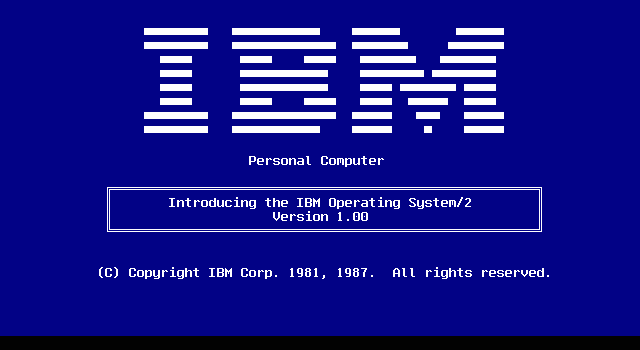
Operating
Systems IBM OS / 2 was made jointly by the International Bussiness
Machines Corporation and Microsoft Corporation, for use on IBM computers
as a replacement for the DOS Operating System. Said OS / 2 stands for
Operating System / 2 operating system is designed to be able to use the
full capabilities of the microprocessor Intel 80286, including the mode
protected (Protected Mode), able to run tasks simultaneously, and
supports Virtual Memory, by maintaining many software compatibility with
MS-DOS in circulation at that time
MAC OS (MACINTOSH OPERATING SYSTEM)
MAC
OS or Macintosh Operating System is the Operating System by Apple
Computer made specifically for Macintosh computers and is not compatible
with IBM-based computer. MAC OS is the first operating system that uses
a graphical user interface (GUI).
The Macintosh operating system is divided into 2 types:
1. MAC OS Classic
Does not have any command line (command line), using the User Interface (UI) completely and use the Cooperative Multitasking
2. MAC OS X
MAC OS X include elements of BSD Unix, One Step, and MAC OS X has Unix-style memory and pre-emptive multitasking.
Excess MAC OS:
1. Stable, because it uses UNIX.
2. Multitasking
3. Display (UI) is very nice.
4. Safe from Malware.
MAC
OS X is a line of computer operating system developed and marketed by
Apple Inc., MAC OS X is the successor of the MAC OS (Classic). MAC OS X
is built on XNU kernel, with standard Unix facilities available from the
command line interface.
SOLARIS

Solaris
Operating System is an Operating System that is based on the UNIX
system that allowed by Sun Microsystems in 1992 as a supporter oada
SunOS. Solaris is famous because of its stability, especially on systems
SPARC (Scalable Processor Architecture), Solaris certified in UNIX
Specification although at the beginning of its development based on
private property, and most of the code is essentially now an OpenSource
Software that is commonly known as OpenSolaris. OpenSolaris is the
OpenSource version of Sun Solaris Operating System, but Sun Solaris
consists of over some code that not only the core of the operating
system for example: Source to Installer, Desktop Software.
Open
Solaris has many features that make OpenSolaris can be used for
large-scale use, ranging from the use of a desktop PC to Mobile PC. The
concept of Open Solaris is as follows:
1. Free Redistribution: Distributed freely.
2. Source Code: Source (Source) should be available for all distributions.
3. Derived Works: Each person can change the code and mendisrtibusikan back.
4. No Discrimination: The code must be provided for a person to develop.
OpenSolaris several advantages compared to other Operating Systems:
1. ZFS: System Restore.
2. DTrace L: Can observe where applications using a lot of time and how long.
3. Failure Management: Prevent, diagnose and correct errors.
4.
Zone: Implementing an operating system abstraction that allows multiple
applications to run in isolation from one another on the same physical
hardware.
5. Multimedia.
FREE BSD

FreeBSD
is a free Unix-type operating system derived from AT & T UNIX.
FreeBSD runs on top intel x86 systems. FreeBSD itself first appeared in
1993 by David Greenman. The goal of FreeBSD is to provide software that
can be used for various purposes. FreeBSD itself developed from 386BSD a
BSD OS development project that runs on Intel chips.
Chrome OS
Chrome
OS is Google's operating system that is lightweight and based on Linux
and the web standard for personal computer PC. Google Chrome works with
Windowing method or switching (Multi-Tasking). Google Chrome OS using
HTML 5 web standard, which is the development of software in the
browser-based operating system. If seen look, Chrome OS is a combination
of Linux and Windows Vista. Chrome OS was released in mid-2010.
Lots
of various Kinds of Computer Operating System continues to grow, there
is no perfect operating system for each operating system has its own
characteristics and power. Although there is the Operating System that
is paid, why do not we try Operating Systems Free or free? Free does not
mean bad, good or bad an operating system depends on the end user
should own. So we must be careful in choosing the operating system being
used.